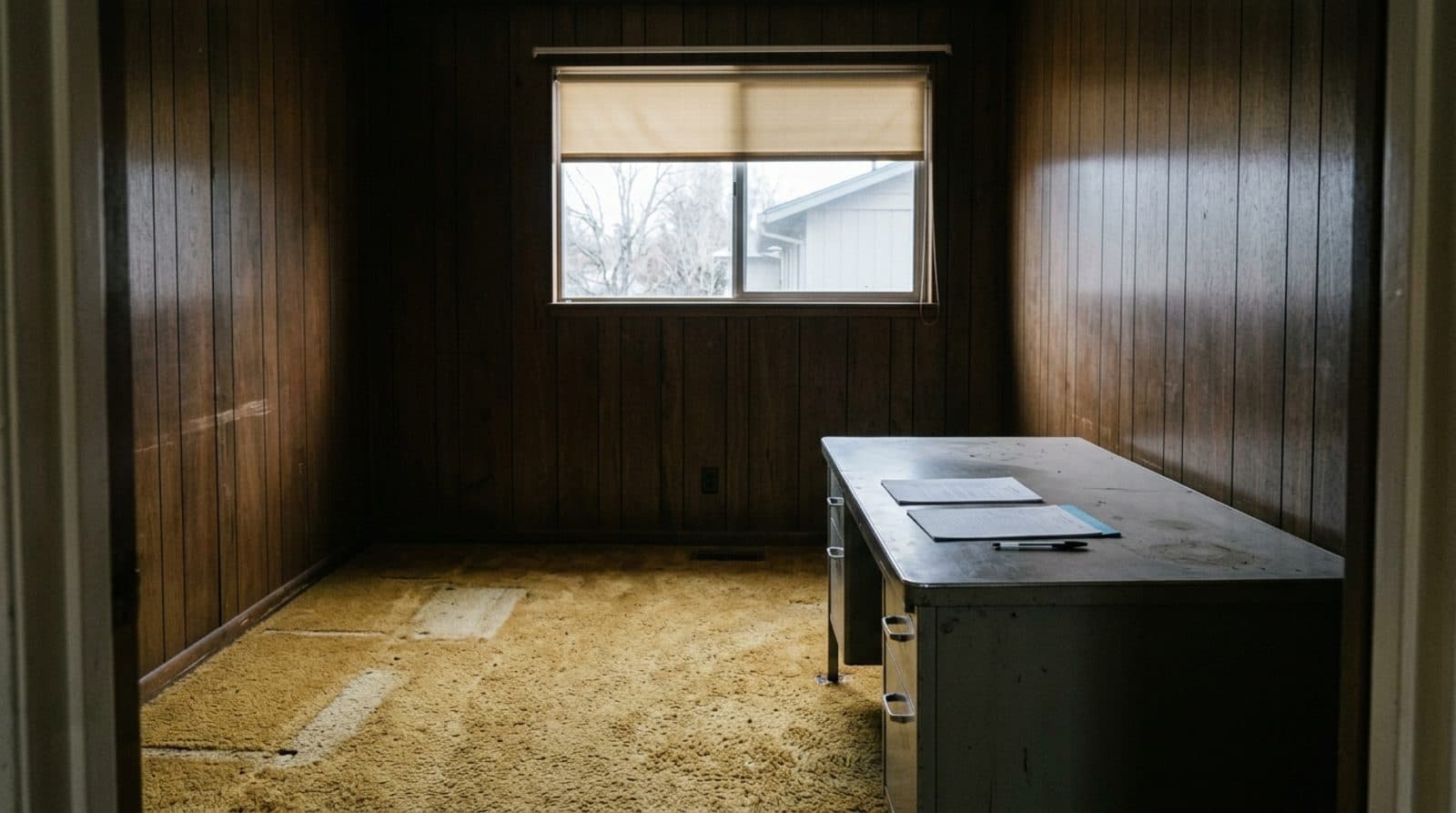
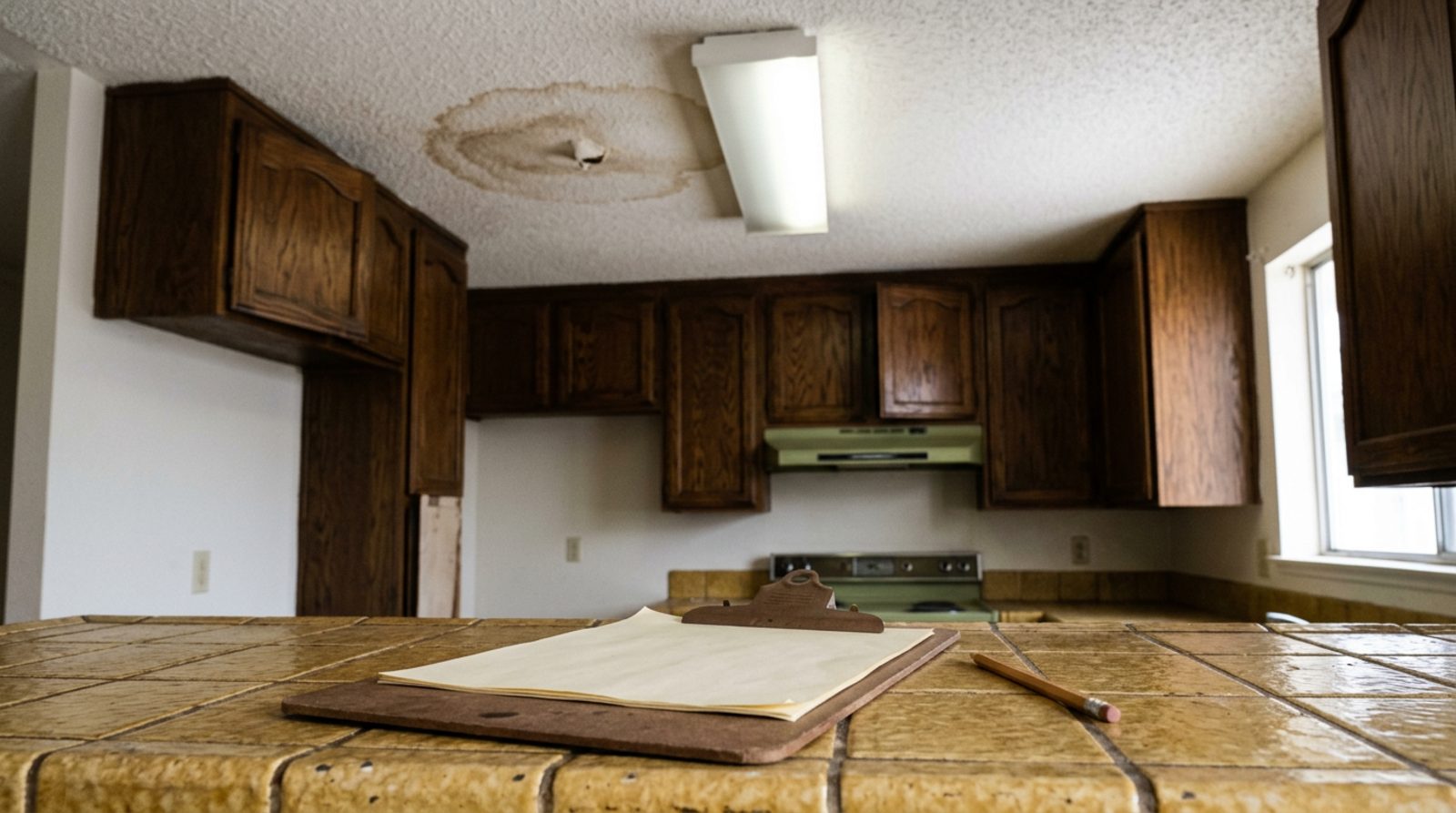
A listing won't finance when the buyer's lender rejects the house's condition, not its price. For an FHA loan, HUD Handbook 4000.1 requires a home that is "safe, sound, and secure," and if defects can't feasibly be corrected the lender must reject it. For a conventional loan sold to Fannie Mae, a C6 condition rating blocks the loan until repairs bring the house to at least C5.
This guide sets out both tests in the lenders' own words, how to read a listing against them, and three ways forward. A disclosure: we are a cash buyer based in San Jose, so we sit on one side of this. The rules quoted are HUD's and Fannie Mae's, not ours. Nothing here is legal or lending advice. Where a rule meets a specific deal, talk to your broker, the buyer's loan officer or a California real estate attorney.
Why a financed offer dies on condition, not price
Every agent knows the low-appraisal problem: value comes in under contract, and the parties renegotiate or walk. The condition problem is harder. The appraiser can value the house at exactly the contract price and the loan can still fail, because the appraisal also reports condition, and each loan program sets a floor the house has to clear.
A price gap closes with a counteroffer. A worn-out roof or a damp crawlspace needs someone to fund the work, do it, and show the lender it's done.
The two floors that matter for most financed buyers are FHA's Minimum Property Requirements and Fannie Mae's condition ratings. Both are plain enough to read before you take the listing, so you can price, disclose and market for the problem instead of hearing about it from the buyer's lender after acceptance.
The FHA test: safe, sound and secure
FHA's rules sit in HUD Handbook 4000.1. The version on hud.gov today is Update 18, marked "Last Revised: 8/12/2026." Its starting point is one sentence: Minimum Property Requirements "refer to general requirements that all homes insured by FHA be safe, sound, and secure."
The handbook then defines what it calls defective conditions (section II.D.3.a.iii): "defective construction, evidence of continuing settlement, excessive dampness, leakage, decay, termites, environmental hazards or other conditions affecting the health and safety of occupants, collateral security or structural soundness of the dwelling."
And it says what the lender does about them, with very little room: "When defective conditions exist and correction is not feasible, the Mortgagee must reject the Property. The Mortgagee may only approve a Property after the Mortgagee confirms that all defects reported by the Appraiser have been corrected."
Read the second sentence twice. A promise to fix things after closing doesn't correct a defect, and neither does a credit. On a vacant or distressed listing, that means someone has to pay for and finish work on a house the seller is trying to leave, before the buyer owns it.
What FHA requires fixed, and what it calls cosmetic
Not every flaw is a deal problem. The handbook limits required repairs (section II.D.3.n): the appraiser "must limit required repairs to those repairs necessary to" maintain the safety, security and soundness of the property, preserve its continued marketability, and protect the health and safety of the occupants.
HUD also names repairs it treats as cosmetic: "missing handrails that do not pose a threat to safety, holes in window screens, cracked window glass, defective interior paint surfaces in housing constructed after 1978, minor plumbing leaks that do not cause damage (such as a dripping faucet)." Note the qualifiers. The handrail is cosmetic only if it isn't a safety threat. The paint is cosmetic only in a house built after 1978.

The roof gets its own rule (section II.D.3.g). The appraiser must notify the lender if the roof covering "does not prevent entrance of moisture or provide reasonable future utility, durability and economy of maintenance and does not have a remaining physical life of at least two years." And: "The Appraiser must report if the roof has less than two years of remaining life, and make the appraisal subject to inspection by a professional roofer."
It also lists conditions that call for an inspection by someone other than the appraiser:
- Water: "standing water against the foundation and/or excessively damp basements."
- Hazards: "hazardous materials on the site or within the improvements."
- Systems: "faulty or defective mechanical systems (electrical, plumbing or heating/cooling)."
- Structure: "evidence of possible structural failure (e.g., settlement or bulging foundation wall, unsupported floor joists, cracked masonry walls or foundation)."
- Pests: "evidence of possible pest infestation."
- Roof: "leaking or worn-out roofs."
An inspection isn't a rejection, but each one adds a report, a wait and often a repair list to the escrow.
The conventional test: C5 finances, C6 does not
For a conventional loan the lender plans to sell to Fannie Mae, the rule is in Selling Guide section B4-1.3-06. The appraiser gives the house a condition rating, and on a distressed listing the line that matters is between C5 and C6.
C5 still finances. Fannie Mae describes it as a house with "obvious deferred maintenance" that is "in need of some significant repairs," where livability is "somewhat diminished due to condition, but the dwelling remains useable and functional as a residence." Homes rated C1 through C5 "are eligible in 'as is' condition."
C6 is where the loan stops. The guide defines it as "substantial damage or deferred maintenance with deficiencies or defects that are severe enough to affect the safety, soundness, or structural integrity of the improvements," with the house "in need of substantial repairs and rehabilitation, including many or most major components." The consequence is stated flatly: "Loans secured by properties with a condition rating of C6 are not eligible for sale to Fannie Mae." A C6 appraisal "must be completed 'subject to' completion of the deficient item(s) with a minimum resulting condition rating of C5."
The sentence that catches agents off guard is this one: "if any portion of the dwelling is rated a C6, the whole dwelling must be rated a C6." A clean, staged front of the house does not average out a back bedroom the appraiser rates C6. One portion rates the whole.
Fannie Mae also singles out three conditions. Where the appraisal shows "evidence of infestation (such as, wood-boring insects), dampness, or abnormal settlement," the lender "must either provide satisfactory evidence that the condition was corrected or submit a professionally prepared report indicating, based on an inspection of the property, that the condition does not pose any threat of structural damage to the improvements."
This is Fannie Mae's guide. A lender that keeps the loan or sells it elsewhere has its own rules, so ask the buyer's loan officer which guide applies.
Read the listing before the appraiser does
California already asks you to look. Under Civil Code section 2079, the listing broker on a one-to-four-unit home must "conduct a reasonably competent and diligent visual inspection of the property offered for sale" and disclose "all facts materially affecting the value or desirability of the property that an investigation would reveal." The same walk-through flags what a lender's appraiser is likely to call out. Note these on it:
- Roof: active leaks, or a covering that looks near the end of its life. FHA flags less than two years of remaining life and calls for a roofer's inspection.
- Water: standing water at the foundation, a damp basement or crawlspace. FHA names "excessive dampness"; Fannie Mae names "dampness."
- Structure: settlement, a bulging foundation wall, unsupported floor joists, cracked masonry. FHA calls for an inspection; Fannie Mae wants abnormal settlement fixed or cleared by a professional report.
- Pests: signs of termites or other wood-boring insects. Both programs name them.
- Systems: electrical, plumbing, heating or cooling that is faulty or not working. FHA lists defective mechanical systems.
- The worst room: fire, flood or vandalism damage, or a gutted kitchen or bath. Under Fannie Mae, one portion rated C6 makes the whole dwelling C6.
None of this makes you the appraiser. It tells you which questions to ask the seller before you set price and terms, and what belongs in the disclosures.
Three ways forward when the listing won't finance
1. The seller repairs before closing
This is the route the rules point to. FHA approves once the reported defects are corrected; Fannie Mae appraises a C6 house "subject to" repairs that bring it to at least C5. It works when the seller has the cash, the time and the appetite to run a contractor on a house they want to leave, which on an estate or a seller already behind is often the problem. If the seller takes this route on a financed deal, put who pays, who does the work and who confirms it in writing, and have your broker or a California real estate attorney read that language.
2. Market it honestly for what it is
If the house won't clear the lender's floor as it stands, a financed offer is an offer that depends on repairs nobody has agreed to fund. If the seller still wants to test the open market, put the condition in front of buyers early. As-is doesn't excuse disclosure: Civil Code section 1102.1 says delivery of the transfer disclosure statement "may not be waived in an 'as is' sale." Some transfers are exempt under Civil Code section 1102.2, including court-ordered sales such as probate court sales and sales by a fiduciary administering a trust or estate, with exceptions; check with your broker before relying on one.
3. Bring in a buyer who doesn't need a lender to approve the condition
A cash purchase doesn't go through FHA's or Fannie Mae's property review, because there is no loan for those rules to govern. That doesn't make every cash buyer a good one. Check proof of funds, the deposit and who will actually take title. Our page for agents explains how to send us a listing.
Either way, the offers go to the seller. NAR's 2026 Standards of Practice 1-6 and 1-7 have REALTORS submit offers "objectively and as quickly as possible" and keep submitting all offers and counter-offers until closing unless the seller has waived that in writing. The seller decides with both offers in view.
HUD is proposing changes. The current rules still apply.
HUD is proposing changes to FHA's Minimum Property Requirements and has posted a draft on hud.gov. A draft is not current policy. Every FHA rule quoted here comes from the current handbook, marked "Last Revised: 8/12/2026." If someone tells you the property rules have changed, ask which published update they mean.
Questions listing agents ask about listings that won't finance
Why won't my listing qualify for financing?
A listing fails financing on condition when the buyer's loan program won't accept the house as it stands. FHA requires a home that is "safe, sound, and secure" and must reject one whose defects can't feasibly be corrected. Fannie Mae won't buy a loan on a C6 home until repairs bring it to at least C5.
Will a leaky roof stop an FHA loan?
A leaking roof is on HUD's list. Handbook 4000.1 names "leaking or worn-out roofs" among conditions that call for an inspection by a qualified individual, and if the roof has less than two years of remaining life the appraiser must make the appraisal subject to a professional roofer's inspection. The lender approves only after reported defects are corrected.
Can a buyer put in an offer using financing on a home listed terms cash?
A buyer can write a financed offer on a cash-terms listing, and a listing broker who is a REALTOR keeps submitting all offers until closing unless the seller waives that in writing (NAR Standard of Practice 1-7). The financed offer still has to survive the lender's condition review, so the seller should weigh it with that in mind.
Can one bad room keep a house from passing a bank inspection?
One room can decide it on a Fannie Mae loan. Selling Guide section B4-1.3-06 says "if any portion of the dwelling is rated a C6, the whole dwelling must be rated a C6," and a C6 home must be appraised subject to repairs that bring it to at least C5 before the loan is eligible for sale.
Who buys a fire-damaged house a lender won't finance?
A cash buyer is one option for a fire-damaged house a lender won't finance as it stands, because a purchase without a loan doesn't go through the FHA or Fannie Mae property review. Vet any cash buyer as you would any buyer: proof of funds, the deposit and who takes title. We buy houses in any condition, vacant or occupied.
Have a listing that won't finance?
Send us the address with the form below. We buy houses in any condition, vacant or occupied, including homes in foreclosure or behind on taxes, and we close in 10–20 days. When we talk, tell us what the appraiser, the inspector or your own walk-through found, and we'll look at the house as it stands.