
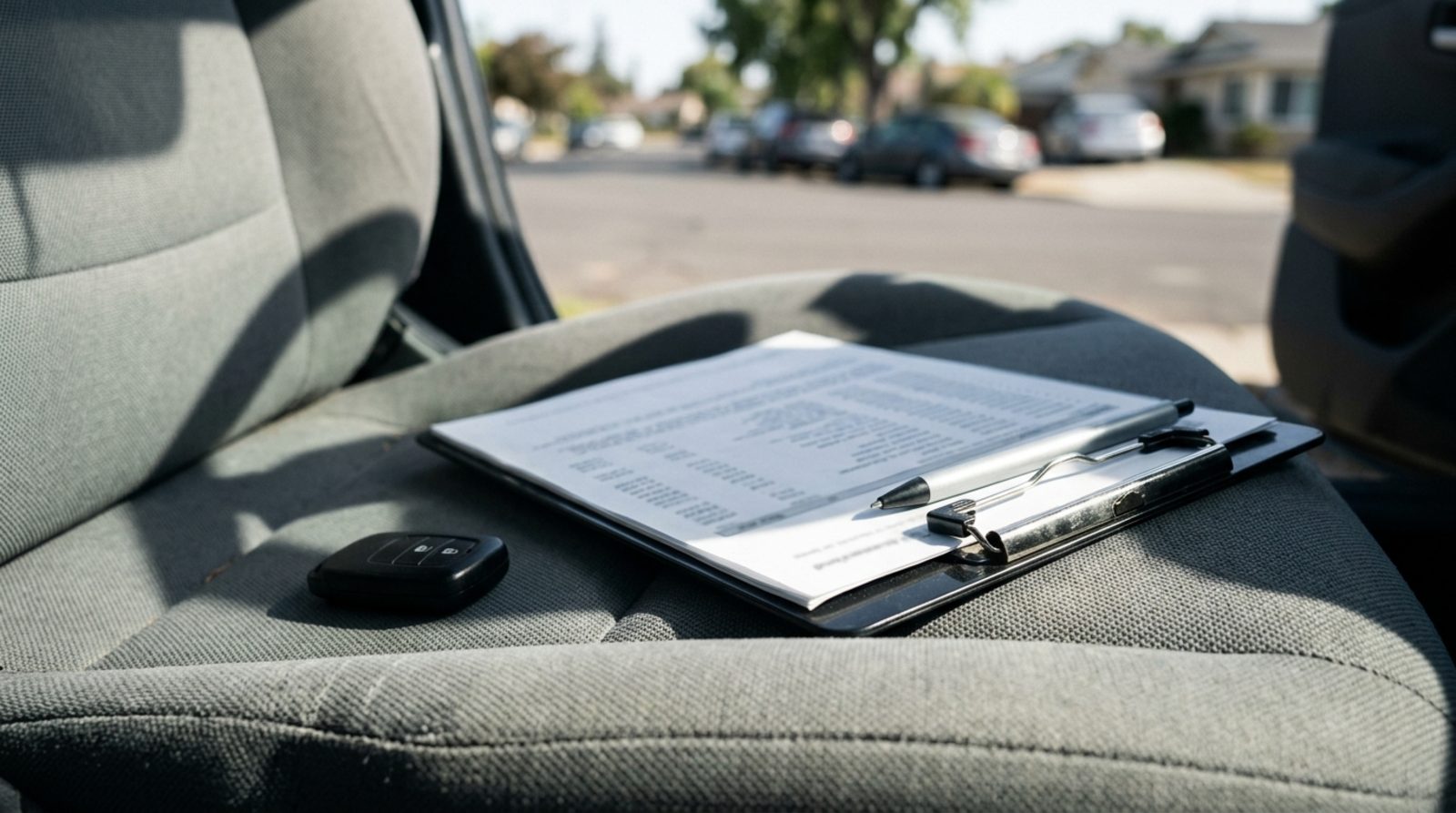
A real proof of funds is a recent statement or letter from a named bank or brokerage, showing the buyer on your offer as the account holder and a balance that covers the price and closing costs. You verify it by confirming the document with the institution itself, using contact details you look up yourself, never the ones on the letter.
That is the short version. The longer version matters because a cash offer with no loan contingency is only as strong as the money behind it, and the document that is supposed to prove the money is the easiest part of the whole offer to dress up. Here is what to look for, the standard lenders use for the same job, and how to check it before your seller relies on it.
What counts as proof of funds, and what does not
Proof of funds is evidence that the buyer already holds the cash to close. In practice it reaches you in one of two forms: a statement from a bank or brokerage account, usually with account numbers partly masked, or a letter on the institution's letterhead confirming a balance. Either can be good. Either can be useless.
Several things get sent as proof of funds that prove something else:
- A pre-approval or pre-qualification letter. That is evidence of a loan, not of cash. If the purchase depends on it, you are holding a financed offer, whatever the cover page says.
- A screenshot of a banking app. No institution named on the page, no account holder, no date range. There is nothing on it you can confirm.
- A letter from a "capital partner" or private fund. Ask whether that money is committed to this purchase, and in whose name it sits. If the answer is a promise rather than a balance, it is not proof.
- A statement in someone else's name. A spouse, a business partner, "my investor". The person with the money is not the person who signed the offer, and that gap is the subject of a whole section below.
The lender standard: what Fannie Mae accepts as proof of cash
Lenders verify cash for a living, and the Fannie Mae Selling Guide sets out what lenders selling loans to Fannie Mae must collect. It does not bind a cash buyer. It is a useful benchmark: if a document would not satisfy a lender checking a down payment, it should not satisfy you checking a full purchase price.
Under Selling Guide section B3-4.2-01, a bank or investment statement must clearly identify the financial institution, clearly identify the borrower as the account holder, include at least the last four digits of the account number, include the time period it covers, include all deposits and withdrawals, and include the ending balance.
For a purchase, the guide asks for the most recent full two-month period of account activity, 60 days, or the most recent quarter if the account reports quarterly. And statements that were downloaded or faxed must show the name of the institution and the source of the information, for example in the banner across the top of the page.
The guide also lists a form that is not a statement at all: a Request for Verification of Deposit (Form 1006). The guide says the information must be requested directly from the depository institution and the complete, signed and dated form sent directly from it. The buyer never handles it. That principle, the bank talking to you rather than the buyer handing you a page, is the heart of verification.
Six checks on the document itself

Before you pick up the phone, read the page. Each of these takes seconds, and a document that fails any of them goes back to the buyer with a specific request rather than a vague doubt.
- The institution is named. A real bank or brokerage, by name, on the page itself. Not a logo pasted above a table.
- The account holder matches the buyer on the offer. Same person, same LLC, same trust, spelled the same way.
- Part of the account number shows. At least the last four digits, so the institution can find the account when you call.
- The period is recent and stated. A statement with no dates, or one from last spring, says nothing about this month.
- The ending balance covers the deal. Price plus the buyer's closing costs. A balance that only covers the deposit is proof of the deposit.
- A download shows its source. If it came from online banking, the banner or footer should name the institution, as the lender standard requires.
Verify it with the bank, not with the buyer
A document that passes all six checks can still be invented, edited or out of date. The only way to know is the route the lender standard's Verification of Deposit takes: hear it from the institution. Find the bank's or brokerage's contact details yourself, from its own website or a branch, and never call the number printed on the letter you were sent.
Make the buyer's permission part of the ask: request that the buyer authorize the bank, in writing, to confirm the letter or balance to you or to escrow. A buyer whose money is real treats this as routine. A buyer who resists the call has told you something the document could not.
The second check you can run yourself is the deposit. When the earnest money lands in escrow, ask the escrow officer to confirm receipt to you in writing. That is the first part of the buyer's money any neutral party has actually seen, and a deposit that is slow to arrive is an early warning about the rest.
None of this replaces advice on a specific deal. If the buyer's documents raise a real question, talk to your broker or a California real estate attorney before your seller relies on the offer.
When the name on the account is not the name on the offer
This is the mismatch that matters most, and it is common. The offer is signed by an LLC formed last month; the statement belongs to an individual. Or the offer names one person and the statement names a partner or "my investor". The document may be perfectly genuine and still prove nothing about the buyer you are in contract with.
Ask one plain question: who is buying, and whose money closes? If the buyer on the contract is an entity, ask how the named account holder stands behind it, and ask for proof in the entity's own name where it has an account. If the money belongs to somebody who is not on the offer, that person has signed nothing with your seller.
A mismatch can also be the sign of a buyer who plans to find someone else to close.
Where the purchase agreement fits
Your contract decides what the buyer owes your seller and when, and it has changed recently. C.A.R. revised the residential purchase agreement in its December 2025 forms release and again in its June 2026 release. Read the revision your offer is actually written on, and check what it says, if anything, about the buyer verifying funds, rather than relying on an older form you remember.
If you are a REALTOR®, missing or weak proof of funds does not let you sit on the offer. Under the NAR Code of Ethics, Standard of Practice 1-6 says REALTORS® shall submit offers and counter-offers objectively and as quickly as possible, and Standard of Practice 1-7 says listing brokers shall keep submitting all offers until closing unless the seller has waived this in writing.
So present it, and present what is missing alongside it. A seller choosing between offers is better served by "this one has verified funds, this one has a screenshot" than by either number on its own.
Probate and court sales: where proof becomes cash on the day
In a court-confirmed probate sale, the local court rules can set what a bidder must put up. In Alameda County, Superior Court local rule 7.310 says bids for real property must be accompanied by a minimum of ten percent of the amount bid, and an overbidder in court must bring cash, money order or certified check for ten percent of the minimum overbid.
Here is the arithmetic on an accepted offer of $800,000. Under Probate Code section 10311, the first overbid must beat it by 10% of the first $10,000 ($1,000) plus 5% of the remaining $790,000 ($39,500), so the minimum overbid is $800,000 + $1,000 + $39,500 = $840,500. In Alameda County, the overbidder's cash, money order or certified check would have to be 10% of $840,500, which is $84,050.
That rule is Alameda's, and it does not tell you what another county requires. Check the local rules of the court hearing the petition before you tell a bidder what to bring.
Questions agents ask about proof of funds
What is proof of funds for a cash buyer?
Proof of funds is a recent statement or letter from a named bank or brokerage showing that the buyer on the offer holds enough cash to close. It should name the institution and the account holder, show part of the account number, the period covered and the ending balance, and it should be confirmable with the institution itself.
How do cash buyers show proof of funds?
Cash buyers usually send a recent account statement or a letter on the institution's letterhead with the offer. A stronger check is hearing from the institution itself. The Fannie Mae Selling Guide lists a Request for Verification of Deposit (Form 1006) that is requested directly from the bank and sent directly from it, so the buyer never handles it.
Is a cash buyer proof of funds letter enough on its own?
A proof of funds letter is a starting point, not verification. Read it against the six checks, then confirm it with the institution using a phone number you find yourself, with the buyer's written authorization. A letter that names no account holder, carries no date or cannot be confirmed should go back to the buyer.
More questions agents ask (3)
What do you need for proof of funds when buying a house?
Lenders following Fannie Mae ask for statements that name the institution and the account holder, show at least the last four account digits, the period, all deposits and withdrawals and the ending balance, covering the most recent full two months for a purchase. That is a sound benchmark for a cash buyer too.
How do I get proof of funds from my bank?
A buyer gets proof of funds from their bank or brokerage, as a recent statement or a letter on the institution's letterhead confirming the balance. For a listing agent, the useful version names the buyer on the offer as account holder, shows the last four account digits and the period, and can be confirmed with the institution.
What is proof of source of funds?
Proof of source of funds shows where the money came from, not just that it sits in an account today. Statements listing every deposit and withdrawal over the last two full months, the lender standard's period for a purchase, show that history: a large balance that appeared last week is a question to ask before you rely on it.
Sources (4)
- Fannie Mae Selling Guide B3-4.2-01, Verification of Deposits and Assets, as published October 7, 2026
- NAR 2026 Code of Ethics and Standards of Practice, effective January 1, 2026 (Standards of Practice 1-6 and 1-7)
- Superior Court of California, County of Alameda, local rules Title 7, rule 7.310
- California Probate Code section 10311
Have a listing that won't finance or sell?
If you are holding a listing a lender won't touch, or one your seller needs sold quietly, send us the address. We buy in any condition, vacant or occupied, including homes in foreclosure or behind on taxes, and we close in 10-20 days. You can also see how we work with listing agents.