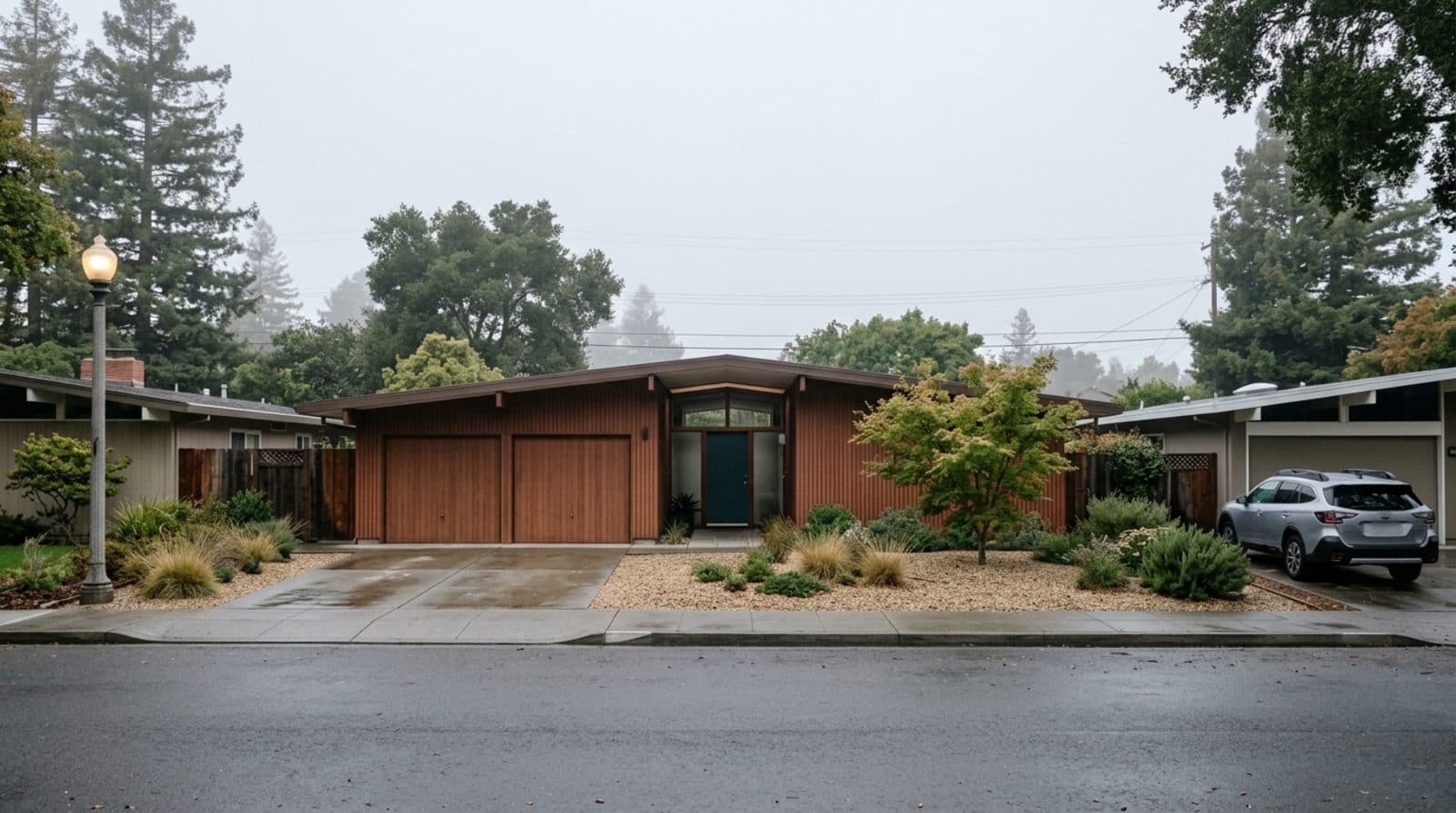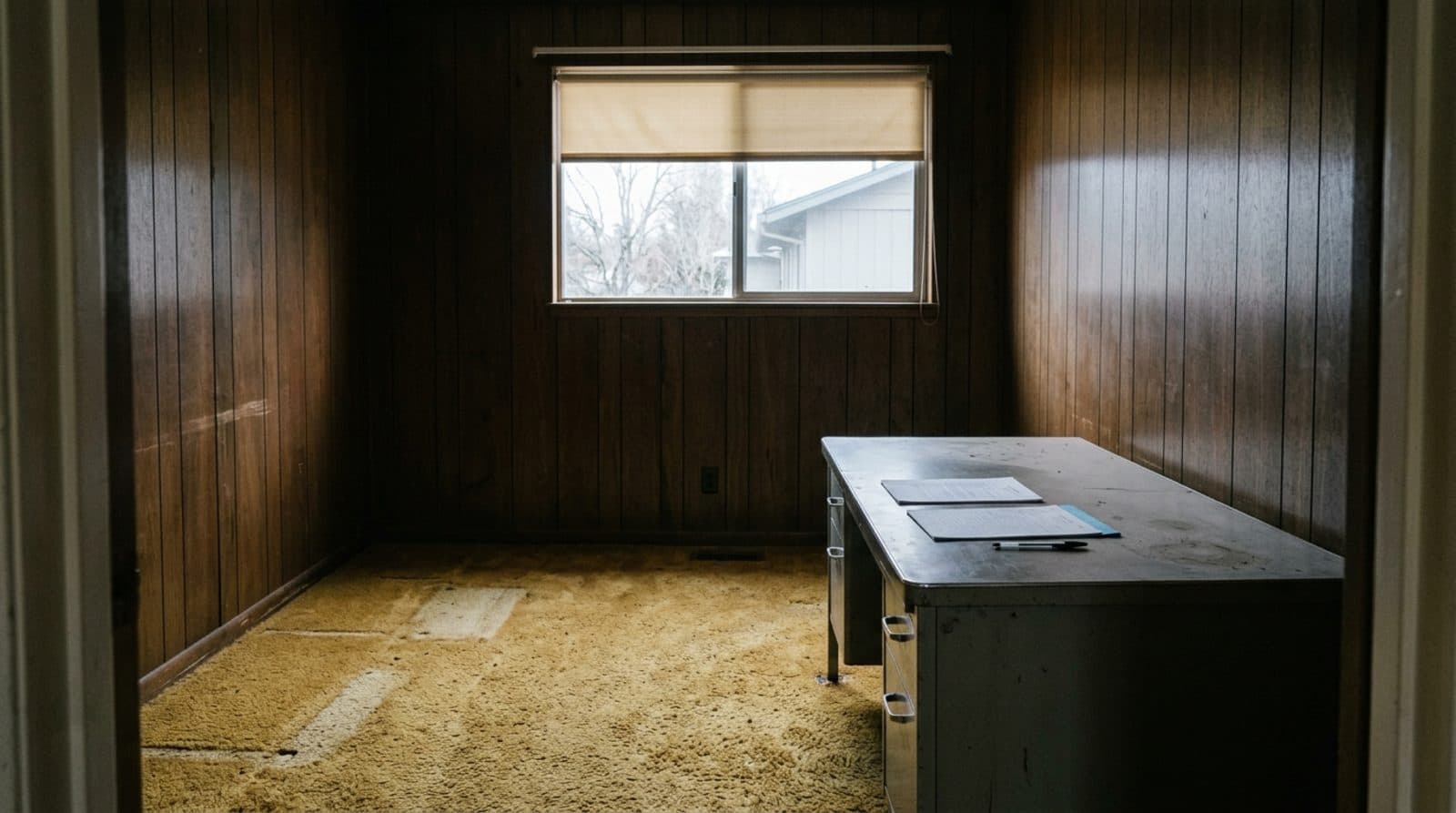
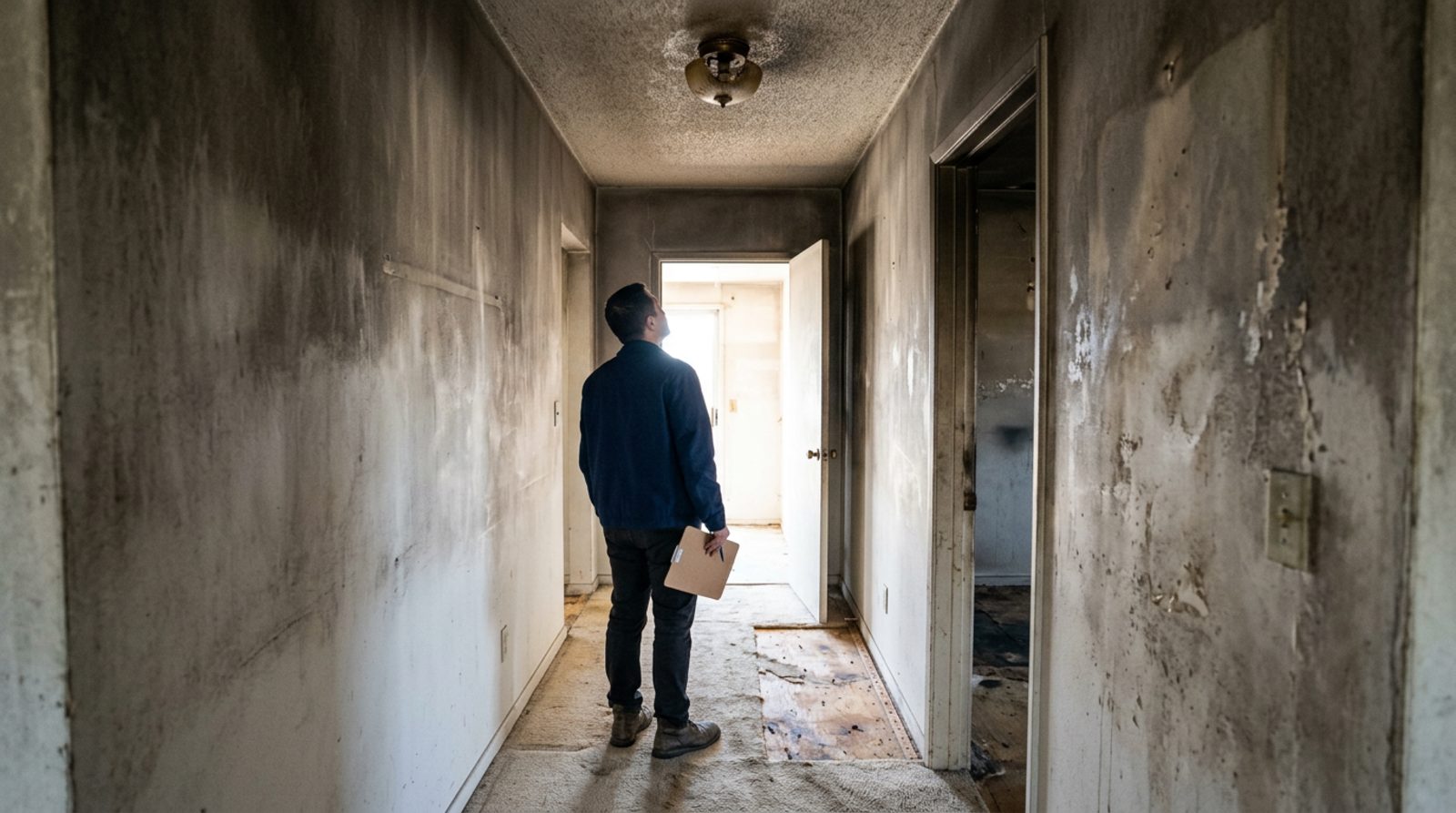
On a California as-is sale of a single-family home, the seller still owes the buyer a Transfer Disclosure Statement unless the transfer is exempt, and you still owe the buyer your own visual inspection. Civil Code section 1102.1 says the TDS "may not be waived in an 'as is' sale," and section 1102 makes any waiver void. As-is changes who repairs. It doesn't change who discloses.
That matters most on the fire-damaged rental, the hoarder house and the estate nobody has walked in years. Below: what the statutes say, which distressed sales are exempt from the form, and what you still owe when they are. This is a guide to the statutes, not legal advice. On a specific deal, talk to your broker or a California real estate attorney.
What "as-is" changes, and what it doesn't
An as-is clause is a deal term about condition: the seller won't repair, and the price reflects it. What it can't do is switch off the disclosure statutes, because the statutes say so directly.
Civil Code section 1102(c) reads: "Any waiver of the requirements of this article is void as against public policy." Section 1102.1 goes further and names the as-is sale specifically, stating the Legislature's intent "that the delivery of a real estate transfer disclosure statement may not be waived in an 'as is' sale, as held in Loughrin v. Superior Court (1993) 15 Cal. App. 4th 1188." A seller who says "it's as-is, they can see it" is describing the price, not the paperwork.
Section 1102.1 also protects the duties that sit outside the form. The Legislature "did not intend to affect the existing obligations of the parties to a real estate contract, or their agents, to disclose any fact materially affecting the value and desirability of the property," and the same section says nothing in the TDS article changes a broker's or salesperson's duty under Civil Code section 2079.
On the contract itself: C.A.R. revised the residential purchase agreement and the Seller Property Questionnaire in its December 2025 and June 2026 forms releases. Read the as-is wording in the revision you are actually using.
The TDS on a distressed listing: who, what and when
Civil Code section 1102(a) applies the TDS article to "any transfer by sale, exchange, real property sales contract" and several other transfer types "of any single-family residential property," except the transfers exempted in section 1102.2. None of the section 1102.2 exemptions covered below turns on the property's condition.
The form itself is set out in Civil Code section 1102.6. On leginfo that section shows a placeholder; the form text is in the published bill, Statutes of 2020, Chapter 370, Section 25.

Timing is where distressed deals get caught
Civil Code section 1102.3 says the TDS goes to the buyer "as soon as practicable before transfer of title." If it is delivered after the buyer has signed the offer, the buyer gets a window to walk away: "three days after delivery in person, five days after delivery by deposit in the mail, or five days after delivery of an electronic record," by written notice of termination to the seller or the seller's agent.
The five-day electronic window applies only "in transactions where the parties have agreed to conduct the transaction by electronic means." The termination period starts when Sections I and II of the form, and Section III if the seller is represented by an agent, "are completed and delivered to the buyer or buyer's agent."
On a fast as-is sale, that window is what bites. A TDS delivered late hands the buyer an exit after acceptance. Get the completed TDS in front of buyers before offers come in, or at the latest with the acceptance, so any termination window runs early rather than mid-escrow.
Your own duty: the Civil Code section 2079 visual inspection
Civil Code section 2079(a) puts a separate duty on the agents. On residential property "improved with one to four dwelling units," a broker or salesperson must "conduct a reasonably competent and diligent visual inspection of the property offered for sale and to disclose to that prospective buyer all facts materially affecting the value or desirability of the property that an investigation would reveal."
The duty attaches to a broker who "has a written contract with the seller to find or obtain a buyer," which is the listing side, and to "a broker who acts in cooperation with that broker to find and obtain a buyer," which is usually the buyer's agent. The DRE's Reference Book, chapter 20, says the same thing in plain English: the seller's agent "and any cooperating agent each have the duty," and the disclosure covers "all material facts affecting value, desirability, and implicitly intended use."
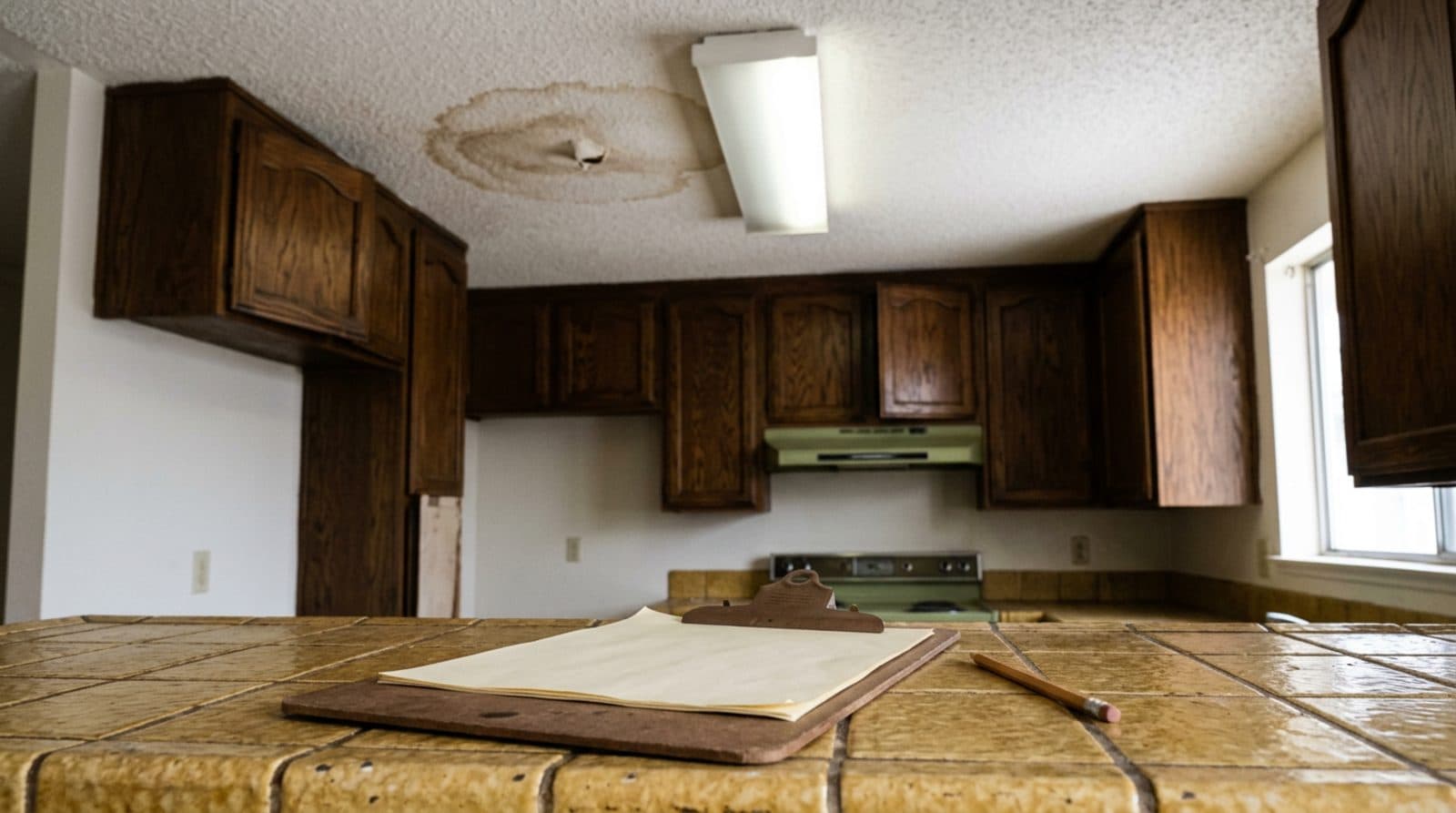
On a distressed property, a careful walk-through turns up a lot: smoke staining, ceiling water marks, soft floors, missing fixtures, a padlocked room, an addition that doesn't match the house. None of it needs a contractor to notice. Walk every accessible room, write down what you see, and get it to the buyer in writing. On a sale the TDS covers, Civil Code section 1102.3 lets you complete your own portion of the form, the agent's inspection disclosure.
What the inspection does not cover
Civil Code section 2079.3 sets the edges: the inspection "does not include or involve an inspection of areas that are reasonably and normally inaccessible to this type of an inspection, nor an affirmative inspection of areas off the site of the subject property or public records or permits concerning the title or use of the property." So section 2079 doesn't ask you to crawl under a collapsed porch or pull the permit history from the city.
That is a limit on the inspection, not a pass on what you already know. If the seller told you the back bedroom was built without a permit, section 1102.1 keeps the existing obligation to disclose material facts in place. Whether that fact is material on your deal, and how to word it, is a question for your broker or a California real estate attorney.
Distressed sales that are exempt from the TDS
Civil Code section 1102.2 lists the transfers the TDS article does not cover. Several describe distressed listings exactly. Read the subdivision, not a summary; the wording decides it.
- Court-ordered sales, subdivision (b). "Sales or transfers pursuant to court order," including "sales ordered by a probate court in the administration of an estate," sales under a writ of execution, "any foreclosure sale," transfers by a trustee in bankruptcy, eminent domain sales and sales resulting from a decree for specific performance.
- Transfers to the lender, foreclosure sales and lender resales, subdivision (c). "Sales or transfers to a mortgagee by a mortgagor or successor in interest who is in default," transfers to a deed-of-trust beneficiary by a trustor in default, "any foreclosure sale after default," and sales by a lender that acquired the property at a foreclosure sale "or has acquired the real property by a deed in lieu of foreclosure."
- Fiduciary sales, subdivision (d). "Sales or transfers by a fiduciary in the course of the administration of a trust, guardianship, conservatorship, or decedent's estate."
- Family and co-owner transfers, subdivisions (e), (f) and (g). Co-owner to co-owner, transfers to a spouse or to a person "in the line of consanguinity" of a transferor, and transfers between spouses resulting from a judgment of dissolution of marriage.
- Tax sales, subdivision (i). "Sales or transfers under Chapter 7 (commencing with Section 3691) or Chapter 8 (commencing with Section 3771) of Part 6 of Division 1 of the Revenue and Taxation Code." Part 6 of that code is headed "Tax Sales."
- Government transfers, subdivision (j). "Sales or transfers or exchanges to or from any governmental entity."
The trust sale that isn't exempt
Subdivision (d) has a carve-out. The fiduciary exemption "shall not apply to a sale if the trustee is a natural person who is a trustee of a revocable trust and is a former owner of the property or was an occupant in possession of the property within the preceding year." A parent who is trustee of their own revocable trust and lived in the house until last spring doesn't get the subdivision (d) exemption.
A seller who is in default but selling to an ordinary buyer before the trustee's sale is a second case to check. Subdivision (c) describes transfers to the lender, foreclosure sales and resales by a lender that took the property back; a pre-foreclosure sale to a third party isn't on that part of the list. Plan on a TDS unless your broker or attorney finds an exemption that fits. Our guide to probate court confirmation and overbids covers the court process for the estate side.
Exempt from the form is not exempt from disclosure
An exemption under section 1102.2 takes the TDS form out of the deal. It does not take disclosure out of the deal. Section 1102.1 says it plainly: "In transfers not subject to this article, agents may make required disclosures in a separate writing."
The same section says the TDS article was not meant to affect the existing obligations of the parties "or their agents, to disclose any fact materially affecting the value and desirability of the property," and that nothing in it changes the section 2079 duty. So on an estate sale under subdivision (d), the form may not apply, but your visual inspection does, and the existing obligation to disclose material facts stays.
In practice: a written disclosure from you, delivered and acknowledged, describing what your inspection showed and the material facts you know. Keep it factual. "Smoke staining on the ceilings of the kitchen and hallway; rear bedroom locked at time of inspection" is more useful to everyone than "property sold as-is, buyer to investigate."
A working checklist for an as-is distressed listing
This sequence keeps the disclosures ahead of the offers when a seller wants the house gone.
- Classify the transfer first. Before you write a remark, decide with your broker whether the sale falls under a section 1102.2 exemption. Check the revocable-trust carve-out in subdivision (d) and whether a default sale is really a transfer to the lender under subdivision (c).
- Walk every accessible room yourself. Do the section 2079 inspection before marketing, write down what you see as you see it, and photograph it for your file.
- Get the seller's TDS done early if the sale is not exempt. A TDS delivered after the offer is signed gives the buyer a three- or five-day termination window under section 1102.3.
- If it is exempt, write your own disclosure. Section 1102.1 allows a separate writing. Put your inspection findings and known material facts in it and get it acknowledged.
- Read the forms you are using. The RPA and the SPQ were both in C.A.R.'s December 2025 and June 2026 releases. Check the as-is language in your revision.
- Escalate the hard calls. Unpermitted work you were told about, a trust with a trustee who lived there, a sale out of default: take those to your broker or a California real estate attorney before the listing goes live.
Selling to a cash buyer doesn't change the duty
An investor buyer is not a reason to lighten the disclosure package. Section 1102 applies to "any transfer by sale" of single-family residential property, and none of the section 1102.2 exemptions quoted above turns on how the buyer pays. Section 2079 runs "to a prospective buyer," and the text quoted above makes no exception for one who pays cash.
An experienced cash buyer prices the condition anyway, but you still owe them the disclosures, and a complete package helps the seller: a buyer who saw the smoke damage in writing has less reason to ask for a price cut in escrow. Before you accept a cash offer on a distressed listing, our guides on checking whether a cash offer is from a wholesaler and what a real proof of funds looks like cover the buyer side. The guides for agents page collects the rest of this series as each one goes live.
Questions California agents ask about as-is disclosure
Does an as-is sale in California still need a Transfer Disclosure Statement?
An as-is sale of a single-family home still needs a TDS unless section 1102.2 exempts the transfer. Civil Code section 1102.1 says the TDS "may not be waived in an 'as is' sale," and section 1102(c) makes any waiver void as against public policy. As-is is a term about repairs and price. It doesn't remove the form.
Are probate and trust sales exempt from the TDS?
Probate court sales are exempt under Civil Code section 1102.2(b), and fiduciary sales administering a trust or estate are exempt under section 1102.2(d). The trust exemption doesn't apply if the trustee is a natural person, the trust is revocable, and the trustee is a former owner or lived in the property within the preceding year.
What do I still owe on a probate or trust listing that is TDS-exempt?
A TDS-exempt listing still carries your Civil Code section 2079 visual inspection and the general duty to disclose material facts. Section 1102.1 says agents in exempt transfers "may make required disclosures in a separate writing." Put your inspection findings and known material facts in writing and get the buyer's acknowledgment.
What does the Civil Code 2079 visual inspection cover on a distressed house?
The Civil Code section 2079 inspection covers a reasonably competent and diligent visual look at accessible areas of a one-to-four unit home. Section 2079.3 excludes areas that are reasonably and normally inaccessible, off-site areas, and public records or permits. The duty applies to the listing agent and to a cooperating agent.
Does selling to a cash investor change my disclosure duty?
A cash investor is still a buyer under the statutes. Civil Code section 1102 applies to any transfer by sale of single-family residential property, unless section 1102.2 exempts it, and the section 2079 duty quoted above runs to a prospective buyer with no cash exception. How the buyer pays doesn't change what you disclose or when.
Which transactions require a Transfer Disclosure Statement in California?
Civil Code section 1102(a) requires the Transfer Disclosure Statement on any transfer by sale, exchange, real property sales contract, lease with an option to purchase, other option to purchase, or ground lease coupled with improvements of single-family residential property. Transfers listed in section 1102.2, such as court-ordered sales and most fiduciary sales, are exempt from the form.
Have a distressed as-is listing?
Send us the address. We buy in any condition, vacant or occupied, including foreclosure and behind-on-taxes situations, and we close in 10-20 days.