
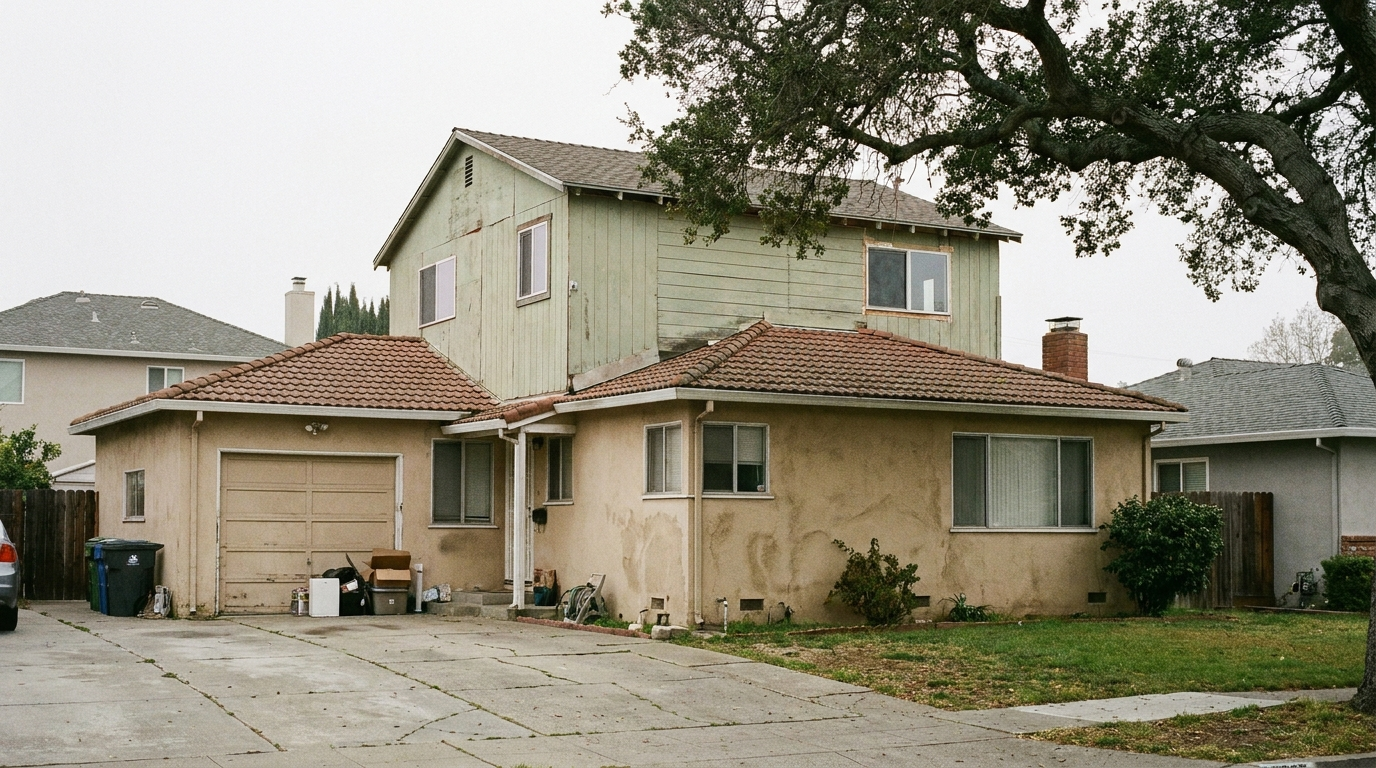
If a buyer's inspector flagged code violations on your Bay Area home, or you've received a notice from the city of Oakland, Berkeley, San Francisco, San Jose, or any other local building department, you're staring at a problem that traditional real estate doesn't handle gracefully. The buyer's lender wants clean. The buyer's insurer wants clean. And every code-enforcement letter that lands in your mailbox compounds with fines, attorney fees, and the threat of mandatory abatement.
Here's the honest 2026 guide. You can absolutely sell a Bay Area home with code violations — and depending on the type of violation and your timeline, you have three real paths forward.
What Counts as a "Code Violation" in California
California cities track an enormous range of issues under "code." The most common ones we see in Bay Area sales:
- Unpermitted construction — additions, garage conversions, ADUs, decks, second-story expansions done without permits. Hayward, Oakland, San Jose, and SF all aggressively cite these.
- Electrical violations — knob-and-tube wiring still active, panels not to current code, illegal sub-panels, unpermitted electrical work to ADUs and converted garages.
- Plumbing violations — galvanized pipes still in use where banned, water heaters not strapped per Bay Area seismic code, illegal sewer cross-connections.
- Fire/safety — missing or non-functional smoke detectors, blocked egress, illegal door locks, missing fire-rated doors between garage and living space.
- Health/sanitation — rodent infestation, sewage issues, hoarding-related conditions (see our hoarder house guide).
- Zoning violations — illegal short-term rental use in restricted zones, unpermitted second units in single-family-only neighborhoods.
- Building envelope — illegal overbuilds violating setback requirements, FAR (floor-area ratio) violations, structures encroaching on easements.
How Bay Area Cities Handle Code Violations (It Varies a LOT)
This matters because the fines, abatement deadlines, and aggressiveness vary wildly:
- Oakland: Aggressive proactive enforcement. Will inspect entire properties when responding to a complaint. Daily fines accumulate quickly.
- Berkeley: Strict on environmental and energy efficiency requirements. Mandatory point-of-sale inspections.
- San Francisco: Very strict on illegal in-law units and ADUs. Mandatory disclosure of all unpermitted work at sale (Form RPA-CA SPQ).
- San Jose: Will issue stop-work orders for active unpermitted construction. Building department records easily searchable by address.
- Hayward, Concord, Fremont: Generally complaint-driven enforcement. Less proactive but will pursue when notified.
- Smaller jurisdictions (San Mateo, Marin): Often slower to enforce but apply state code uniformly.
Regardless of jurisdiction: once a code violation is recorded against the property, it transfers with the property at sale. The new owner inherits the obligation unless cleared first.
California Disclosure Law — You MUST Disclose
Under California Civil Code §1102, sellers must disclose all known material defects, including unpermitted work and known code violations. This applies even if you sell as-is. Hiding a known violation is fraud and exposes you to:
- Lawsuit from the buyer for all costs to remediate the violation
- Punitive damages
- Attorney fees (theirs)
- Possible rescission of the sale
The good news: disclosed violations don't kill cash sales the way they kill traditional sales. Cash buyers expect them and price accordingly.
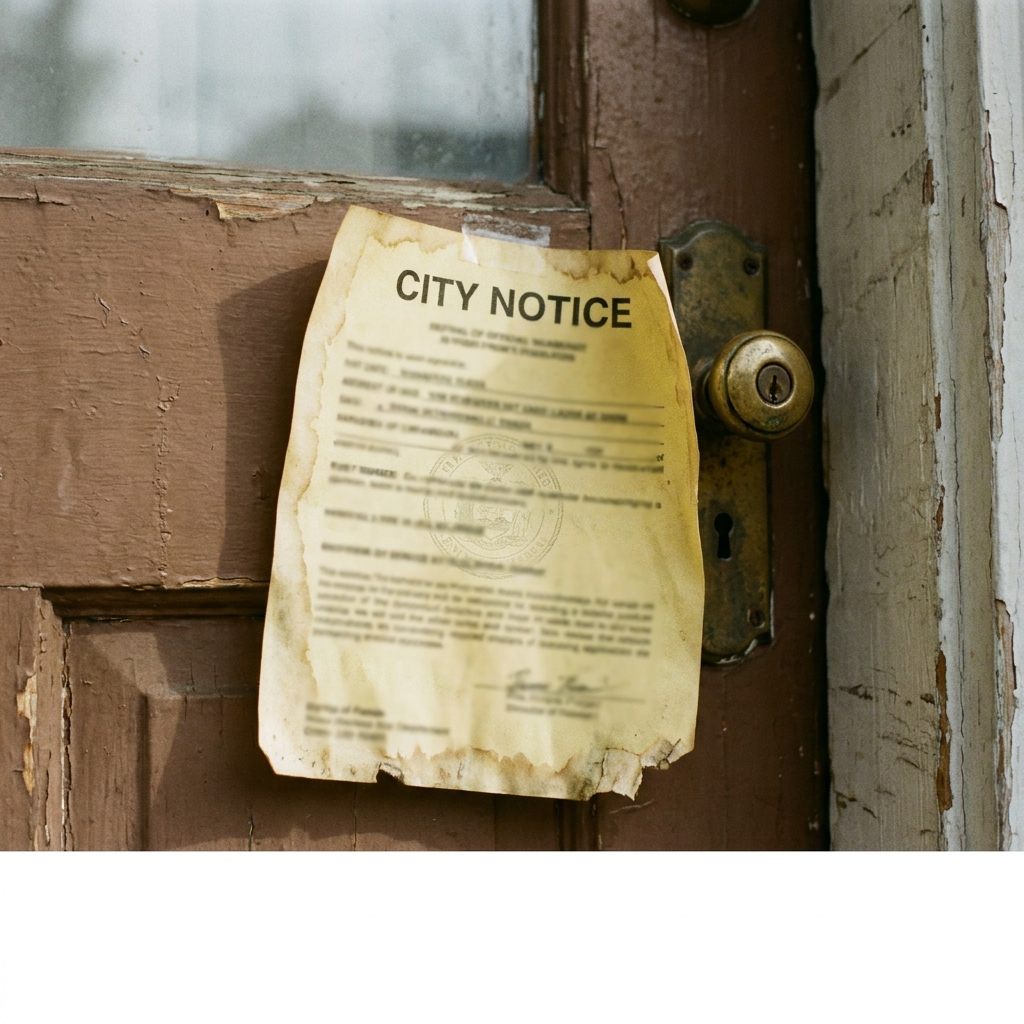
Why Traditional Sales Get Stuck on Code Violation Properties
- Buyer's lender refuses funding. Most conventional, FHA, and VA loans require the property to pass an appraiser's inspection. Active code violations or unpermitted habitable square footage routinely fail this.
- Title insurance complications. Some title insurers add exclusions for unpermitted work, which lenders won't accept.
- Buyer's insurance refuses to bind. Hard-to-insure properties block the close.
- Buyer renegotiates after inspection. Even if a deal initially gets to contract, the buyer's inspection report flags the violation and they demand $30K-$80K credits or walk away.
- Listing stigma. A property that's been on market 90+ days with multiple price drops looks distressed and attracts only lowball offers.
Your 3 Real Options
Option 1 — Cure the Violation Before Selling
Pull retroactive permits, hire licensed contractors, bring everything up to current code, get the city to sign off, then list. Realistic costs:
- Retroactive permit + plan review fees: $2,500-$15,000+
- Required corrections (electrical, plumbing, structural): $5,000-$50,000+
- Architect/structural engineer (if required for unpermitted additions): $3,000-$12,000
- City inspections + sign-off: variable, often months
- Holding costs during the process: 4-8 months of mortgage, insurance, utilities, taxes
Best for: minor violations with clear cure paths and homeowners with cash + time.
Option 2 — Disclose and Sell with Buyer Credits
Disclose the violation, list the property at a discount that accounts for buyer's expected cost to cure, and let the buyer take it on after closing. Pros: open market exposure. Cons: lender financing still complicated, smaller buyer pool, longer time on market, lots of inspection-period drama.
Option 3 — Sell As-Is to a Cash Buyer
Cash buyers experienced with Bay Area code violations buy the property in current condition. We:
- Take the violation on as our renovation problem after closing
- Pull retroactive permits or remove unpermitted work as part of our rehab
- Coordinate directly with the city's building department
- Pay any accumulated fines or abatement costs at closing from sale proceeds
- Close in 10-14 days with no financing contingency
Real Bay Area Math: Code Violation Sale
Scenario: 3-bedroom Oakland home, after-repair value (ARV) $895,000. Has an unpermitted in-law unit converted from the garage. City has issued a Notice of Violation requiring abatement or legalization.
Path A: Cure + List Traditionally
- Retroactive permit + plan review: -$8,000
- Required corrections (electrical to code, fire separation, egress): -$32,000
- Architect + structural engineer: -$6,500
- Holding costs (5 months): -$16,000
- Sale price (ARV): $895,000
- Agent commissions (5%): -$44,750
- Closing costs: -$17,900
- Net to you: ~$769,850
- Timeline: 6-9 months
Path B: Sell As-Is to Eugene Bay Area Home Buyers
- Cash offer (as-is, violation absorbed): $740,000
- Repairs/permits: $0
- Holding costs: $0
- Commissions: $0
- Closing costs: $0 (we cover them)
- Net to you: ~$740,000
- Timeline: 10-14 days
Difference: $30K more on paper for the traditional path — if everything goes right over 6-9 months. Many Bay Area sellers in this situation pick the certainty of $740K in 2 weeks.
Frequently Asked Questions
Will the city stop me from selling if I have an active violation?
No. The violation transfers with the property. The new owner becomes responsible for resolving it.
What if I don't know about violations on my property?
Title officer pulls building department records during escrow. If a violation is recorded against the property, it'll surface. We tell you what we find.
Can I just remove the unpermitted work and sell?
Sometimes. If the unpermitted work is removable (deck, shed, illegal door) you can demolish/remove. If it's structural (added square footage, illegal in-law) removal often costs as much as legalization.
Are accumulated fines paid by me at closing?
If the city has recorded a lien for fines, yes — paid at closing from sale proceeds along with other payoffs. If just a notice without a recorded lien, often negotiable.
What about San Francisco's "Mandatory Soft Story Retrofit" violations?
Common in SF multi-unit properties built before 1978. We handle these — they're a structural retrofit obligation, not a fine, and we absorb the cost into our renovation.
Will the buyer's lender block a cash sale to you?
No — we're paying cash, no buyer-side lender involved. That's the whole point.
What if the violation is in dispute?
You can sell while disputing. We can sometimes coordinate with the city to put the violation in a hold pattern during the sale. Talk to us about your specific situation.
How is this different from a code violation in Los Angeles?
Bay Area cities tend to be MORE aggressive on code enforcement than LA, especially Oakland and SF. They issue notices faster, fines accumulate faster, and they record liens earlier. Don't wait.
Get a No-Obligation Cash Offer on Your Code-Violation Property
Code violations don't get easier with time — fines compound, deadlines pass, and abatement orders become enforceable. Call Eugene Bay Area Home Buyers at (408) 717-4505 for a free, confidential consultation. We'll listen to your situation, walk the property, and present a written cash offer within 24 hours. We buy houses in any condition, open code cases and all.
If your property has multiple complications — tax liens, foreclosure, foundation issues, or general as-is condition — we handle every layer at closing. One transaction.
Want to understand the math before requesting an offer? See exactly how much cash home buyers pay — the formula, factors, and 3 Bay Area scenarios.


