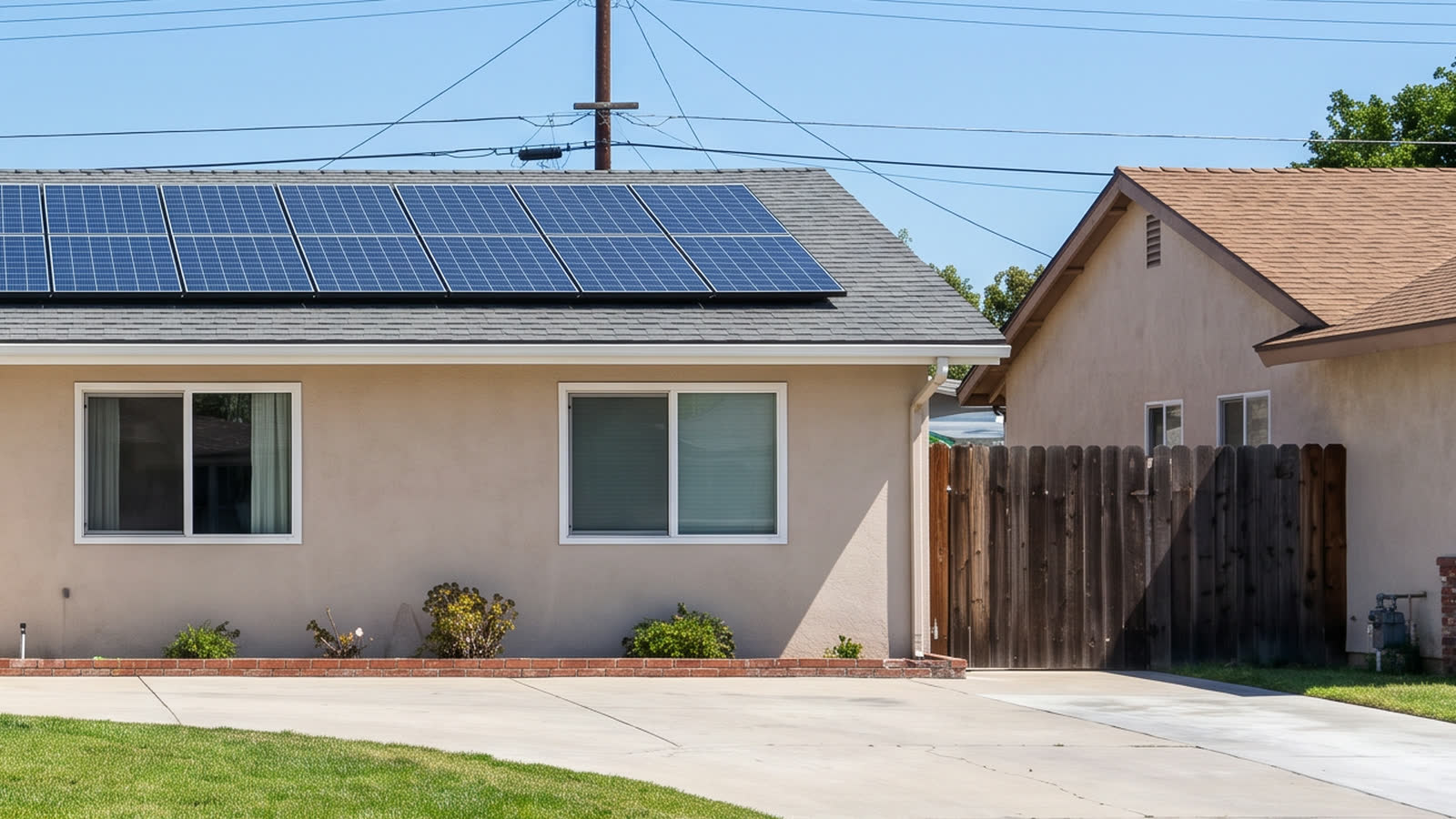
Short answer. You can sell a California house with leased solar panels or a PACE assessment, but each has to be handled before closing. A solar lease or power purchase agreement is usually transferred to the buyer, or prepaid or bought out if the contract allows. A solar loan is paid off or assumed if the lender allows it. A PACE assessment rides on the property tax bill and is often paid off at closing.
Step 1: find out what kind of solar you have
Rooftop panels look the same from the street. The paperwork is what matters. There are five common setups:
- Owned outright. You paid cash. Nothing to transfer; the panels are part of the house.
- Solar loan. You own the panels but borrowed to buy them. The loan is a debt you owe, sometimes with a filing recorded against the property.
- Solar lease. A solar company owns the panels and you pay a monthly lease.
- Power purchase agreement (PPA). A solar company owns the panels and you pay for the power they produce, per kilowatt-hour.
- PACE financing. Property Assessed Clean Energy financing paid for the panels (or other energy work), and it is repaid as an assessment on your property tax bill.
Look at your contract, your monthly statements and your property tax bill. A separate line on the tax bill for an energy or improvement assessment is a sign of PACE. If you cannot find the contract, call the solar company and ask for a copy and a current payoff or transfer statement.
What title will find
When you sell, the title company searches the records for anything attached to the property. Solar and PACE often show up:
- Fixture filings. Solar companies and lenders sometimes record a filing that shows they have an interest in the equipment. It may need to be released or handled by agreement before closing.
- PACE assessments. These appear with the property taxes. Because they are collected like taxes, many buyers' lenders require them to be paid off before they will lend.
- Solar loans. If the loan is secured against the property, it shows up as a lien to be paid or released.
Find out early. A title surprise late in escrow can push a closing back. Read selling a house with title problems and, for liens collected with property taxes, selling a house with a tax lien. To compare a payoff against a cash offer, see cash offer vs listing with an agent.
Selling with a solar lease or PPA
You usually have three choices. Your contract sets the exact rules.
Transfer the lease to the buyer
The buyer takes over the lease or PPA. The solar company often checks the buyer's credit (some use a soft check) and sends transfer paperwork. Watch out for: buyers who do not want the payment, buyers who fail the credit check, and transfers that take time. Start the transfer request as soon as you accept an offer.
Buy out the lease before closing
If your contract allows a buyout, you pay the solar company the buyout amount and the panels become part of the house. Ask whether escrow can pay it from your sale proceeds. Watch out for: buyout amounts that are higher than you expect. Ask for a written buyout quote early.
Prepay the remaining lease
Some contracts let you prepay the remaining payments so the buyer takes over a lease with nothing left to pay. Ask the solar company if your contract allows it.
Removing the panels: under a lease the company owns the panels, so removal is the company's decision and may cost money. Ask before you assume.
Selling with a solar loan
A solar loan is a debt. It is usually paid off from sale proceeds at closing, like a mortgage. Some loans can be assumed by a buyer if the lender agrees. Ask the lender for a payoff statement and whether there is any filing to release on title.
Selling with a PACE assessment
PACE is repaid through the property tax bill over many years. When you sell:
- Many buyers' lenders want it paid off. Because of how PACE is collected, many mortgage lenders will not make a new loan until the assessment is paid in full.
- Some buyers may take it over. A cash buyer, or a buyer whose lender allows it, may accept the property with the assessment in place; expect that to be part of the price talk.
- Get a payoff amount early. Ask the PACE administrator for the payoff and any prepayment terms. Escrow can pay it from your proceeds at closing; after payoff, the administrator asks the county to remove the assessment.
California also requires the seller to make a good-faith effort to get the PACE disclosure notice and give it to the buyer; a copy of the most recent property tax bill counts as an equivalent notice (Civil Code 1102.6b). If the buyer is using an FHA loan, the purchase contract must say the seller will pay off the PACE obligation at or before closing.
When the numbers do not work
Sometimes the payoff or buyout is larger than the seller's equity can comfortably cover, or the house has other problems: an older roof under the panels, deferred repairs, or tenants. In those cases a traditional buyer may walk away. See selling an underwater house in California and selling a house as-is in California.
A cash buyer can look at the whole picture at once. Eugene Bay Area Home Buyers buys houses in any condition, vacant or occupied, and closes in 10 to 20 days. Our offers are based on current market data and honest repair estimates. At closing, the payoff or transfer is handled according to the contract and the escrow instructions.
The roof under the panels
Panels sit on a roof that may be near the end of its life. If the roof needs replacing, the panels have to be removed and reinstalled, which costs money and time. Buyers and inspectors will ask how old the roof is.
A short checklist for sellers
- Find the contract and identify the type: owned, loan, lease, PPA or PACE.
- Request a payoff, buyout or transfer statement in writing.
- Ask title to search early and tell you what is recorded.
- Tell your agent, and disclose the arrangement to buyers up front.
- Build the transfer or payoff into your timeline and your net sheet.
- If the buyer will take over a lease, start the solar company's transfer process the day you accept the offer.
How solar affects price and buyers
Owned panels with a solid production history can be a selling point: lower electricity bills are easy to explain. Leased panels and PPAs are harder. Some buyers see a monthly payment they did not choose, and their lender may count the lease payment when it calculates how much they can borrow. A PACE assessment raises the property tax bill the buyer sees in the listing, which can make the house look more expensive to own than its neighbors.
That does not mean the house will not sell. It means the solar or PACE arrangement should be explained in the listing and the disclosures from the start, with the contract, the remaining term, the monthly cost and the payoff or buyout numbers ready to share. Surprises late in escrow can make buyers walk.
Timing your sale around the paperwork
Solar companies and PACE administrators work on their own schedules. A buyout quote, a transfer approval or a release of a recorded filing can take days or weeks. Build that into your plan:
- Ask for the payoff or buyout statement before you list, so you know your net.
- If a buyer will assume a lease, send the solar company the buyer's details as soon as the contract is signed.
- Ask escrow to order any release documents early, and confirm who will sign them.
- If the house is in a trust or an estate, confirm who has authority to sign with the solar company as well as with escrow.
Questions sellers ask
Can I sell my house if I have leased solar panels?
Yes. The lease is usually transferred to the buyer, or prepaid or bought out before closing if the contract allows.
Does a PACE assessment have to be paid off when I sell?
Often, yes, because many buyers' lenders require it. A cash buyer may accept it in place; expect it to be part of the price talk.
How do I know if I have PACE?
Look for a separate energy or improvement assessment on your property tax bill, and check your financing paperwork.
What if the buyer does not want the solar lease?
You can ask the solar company for a buyout or prepayment quote, and ask escrow whether it can be paid from your proceeds.
Will the solar company remove the panels?
Do not count on it. Read your contract and ask the company first.
Will a cash buyer buy a house with a solar lease or PACE?
Eugene Bay Area Home Buyers buys houses in any condition, including houses with a solar lease or a PACE assessment. Our offers are based on current market data and honest repair estimates. At closing, the payoff or transfer is handled according to the contract and the escrow instructions.
How long does a solar lease transfer take?
It varies by company. Start the request as soon as you accept an offer. Ask the solar company for its transfer checklist in writing: what the buyer must submit, whether the buyer has to be approved, and which documents escrow will need from the company. Share that list with your agent and escrow officer so the transfer does not run past your closing date.
General information, not legal or financial advice. Read your own solar or PACE contract and ask your escrow officer or attorney.